Myco Habitat
Major Project 2022, MDIT, RMIT
Project Correspondence: Royal Botanical Gardens VIC
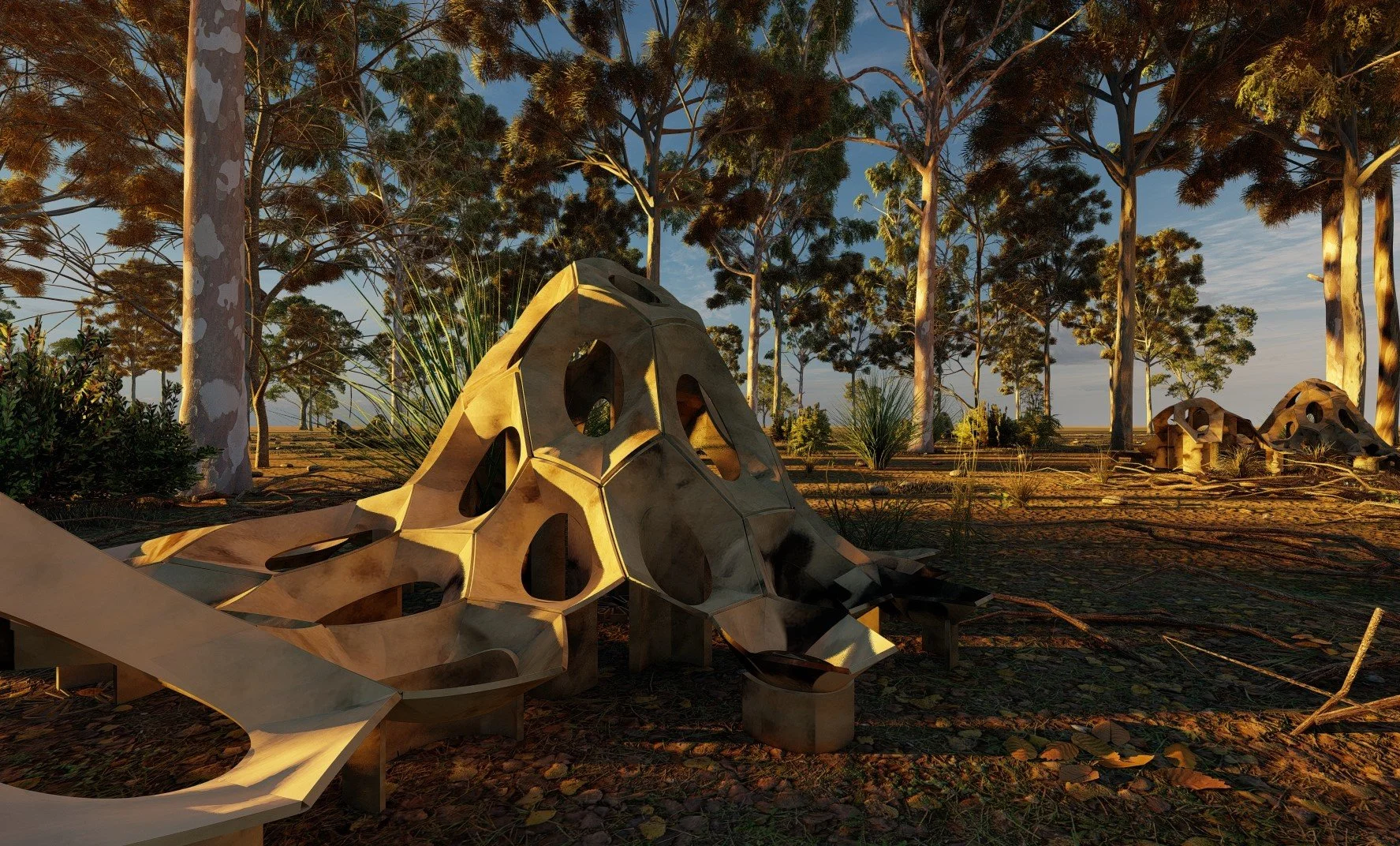
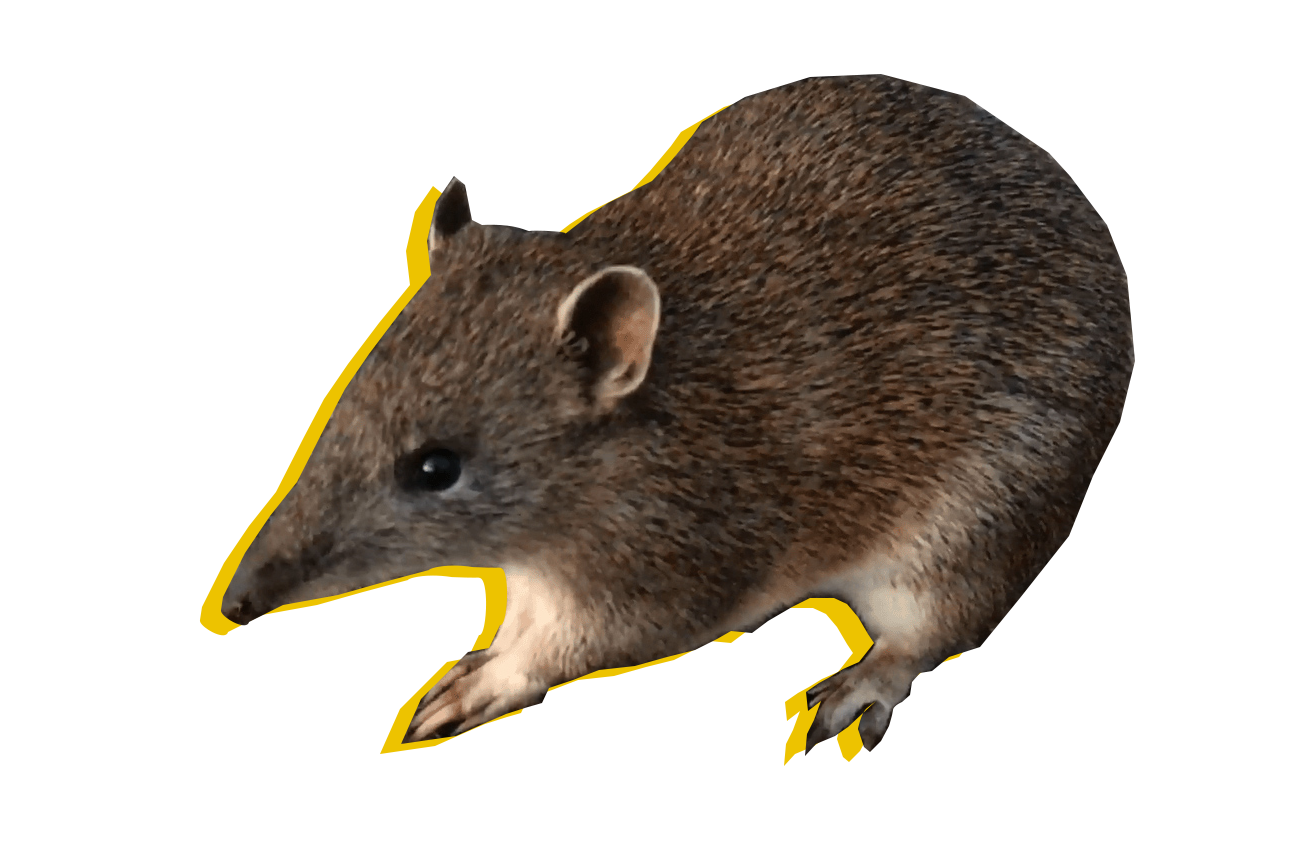
Created from 3D printed mycelium composite material to facilitate species cohabitation with The Southern Brown Bandicoot as the storyteller. MyCo-habitat is a source of food and shelter for the endangered bandicoot species facilitating habitat building. These tiny marsupials are essential players in the forest ecosystem, maintaining forest health in countless ways, from aerating topsoil to encouraging new mycelial connections between plants.
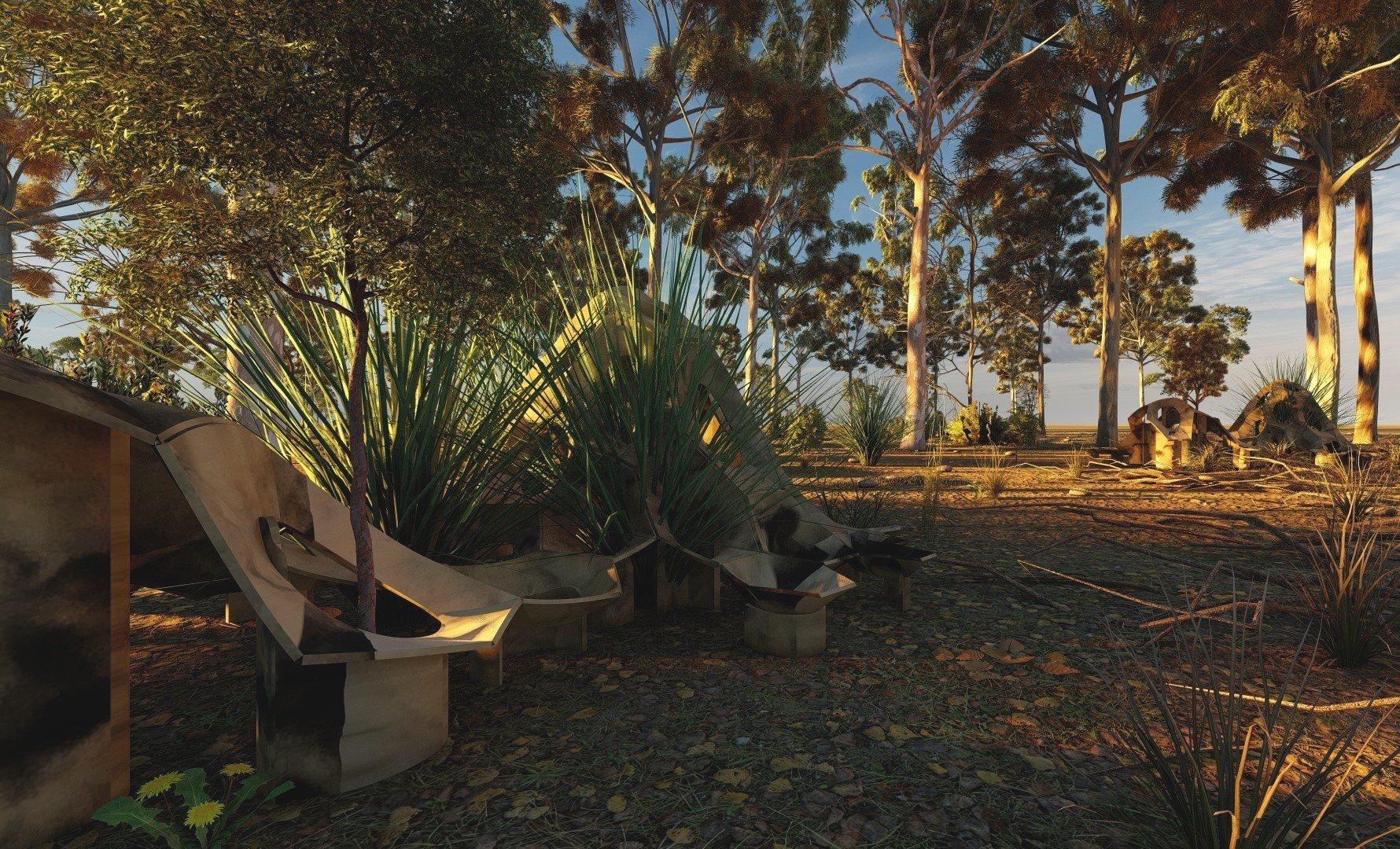
The project aims to use design as a facilitator and catalyst, exploring the ways in which human intervention through the use of bio-material within a natural system can trigger ecological change.
MyCo- habitat is created out of mycelium tissue to facilitate cohabitation with The Southern Brown Bandicoot, a vital but endangered species that lives in the peri-urban fringes of Melbourne city.
Transient in nature
MyCo-habitat catalyses a rewilding process. The temporary shelters made of mycelium based material biodegrades over time returning nutrients to the soil. Nature takes over replacing the MyCo-habitat with endemic species that have been found to be permanent nesting sites for bandicoots.
Structure of Mycoshelter
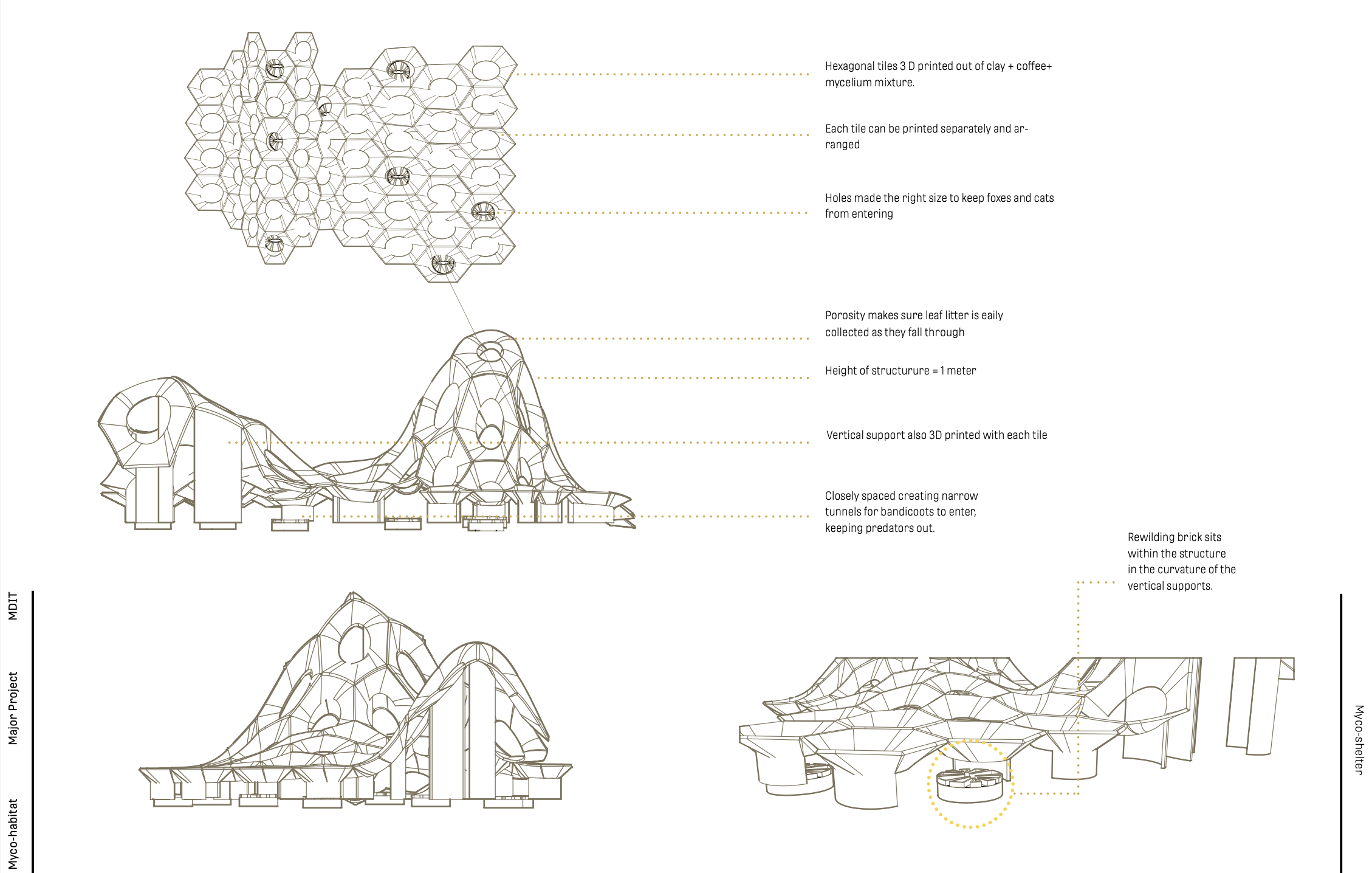
The Rewilding Brick
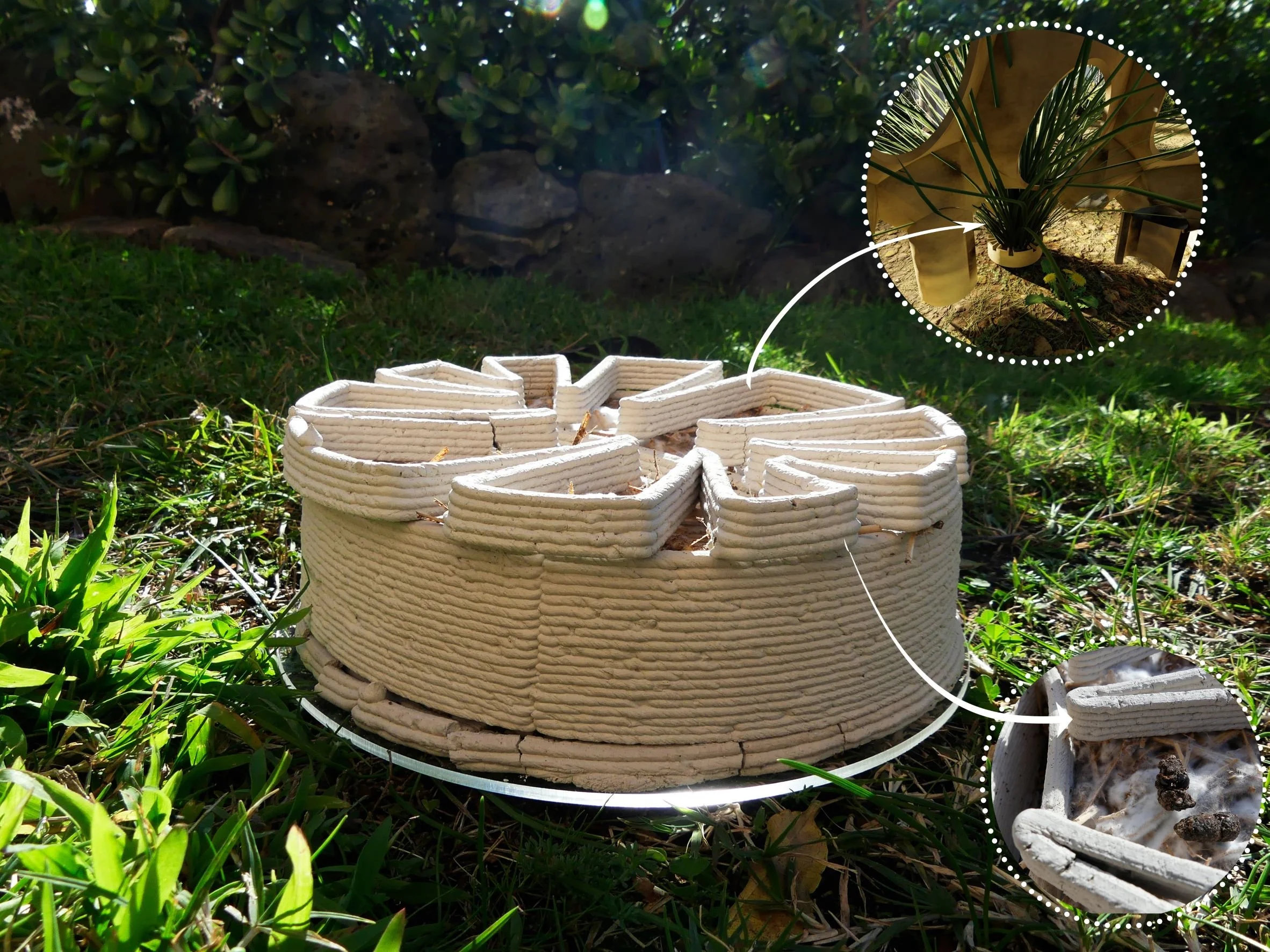
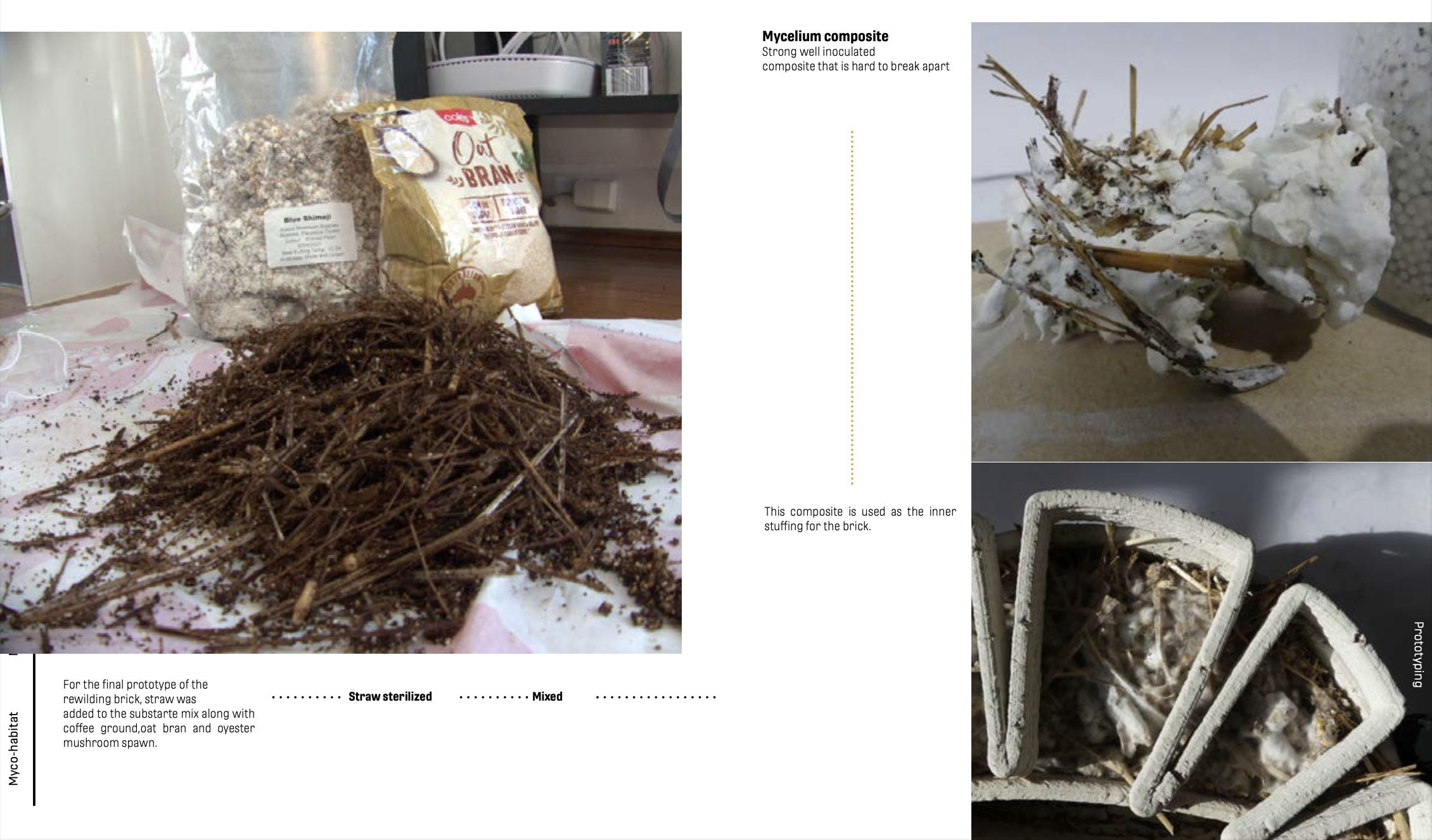
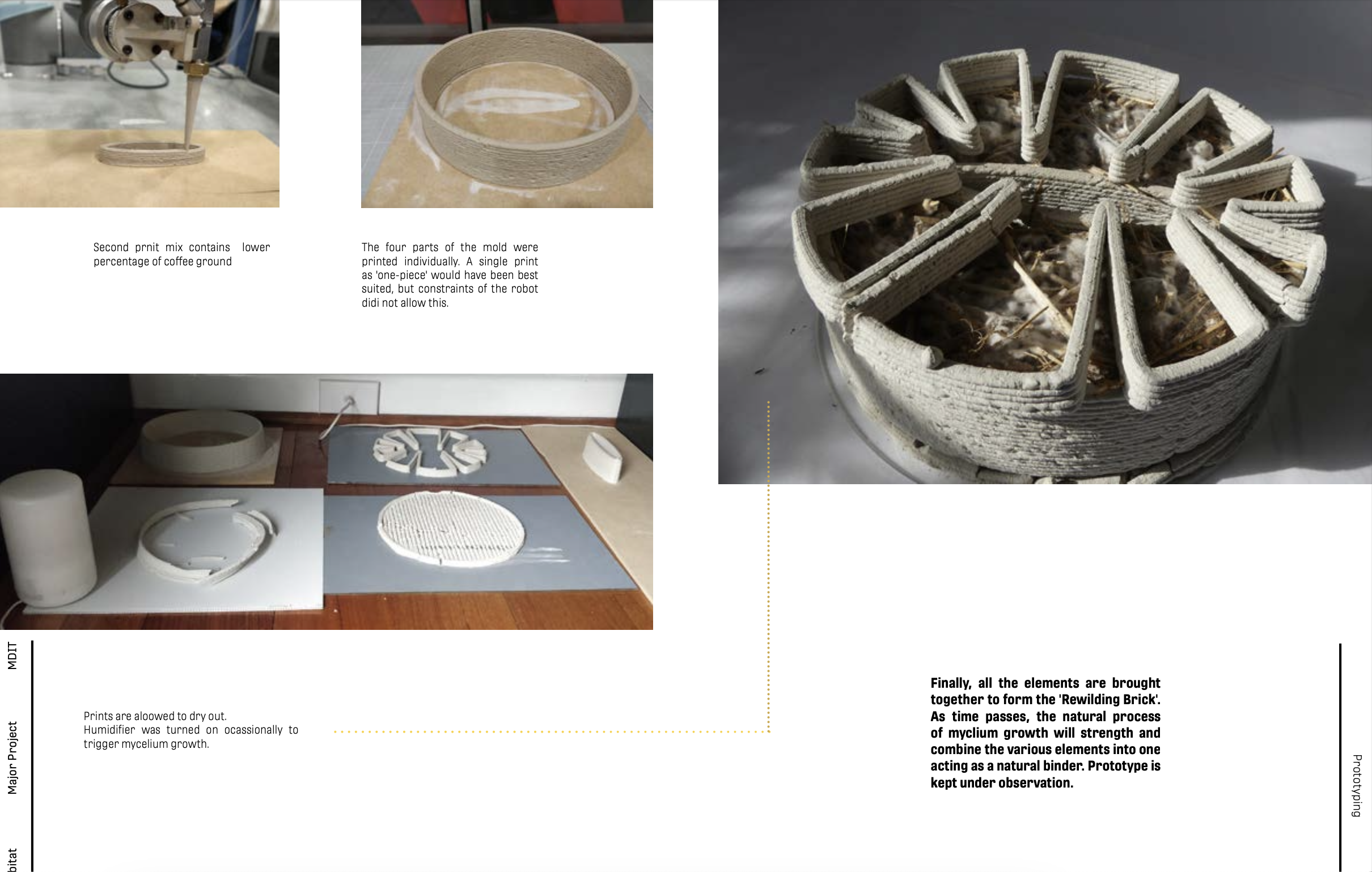
The rewilding brick is a catalyst in the lifecycle of the design and sits snugly within the larger shelter. It is made of completely biodegradable mycelium composite material. The mechanism is quite simple, taking advantage of natural mycelial spore dispersal cycles through bandicoot scat and facilitating this process for habitat building/re-wilding.
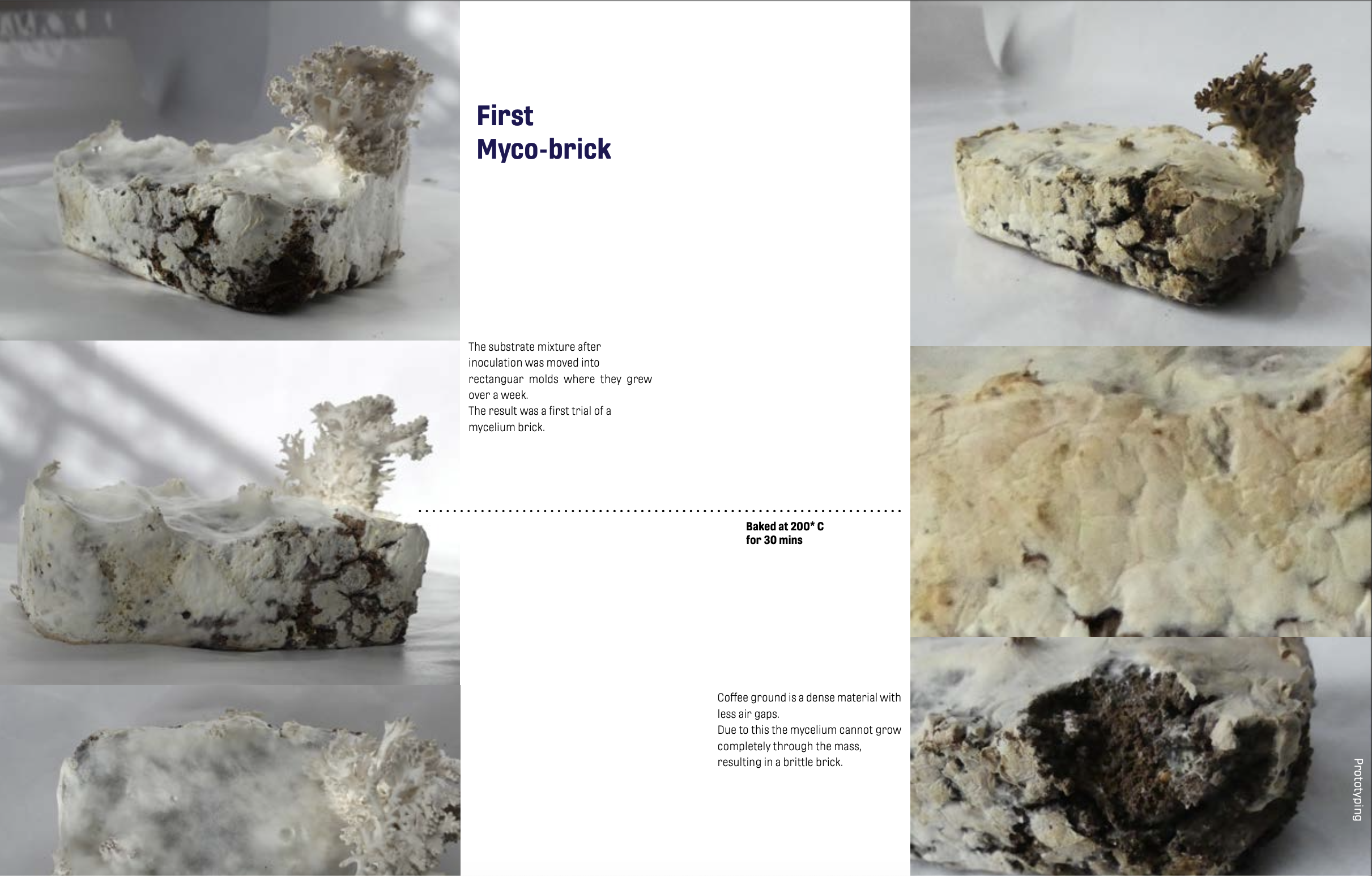
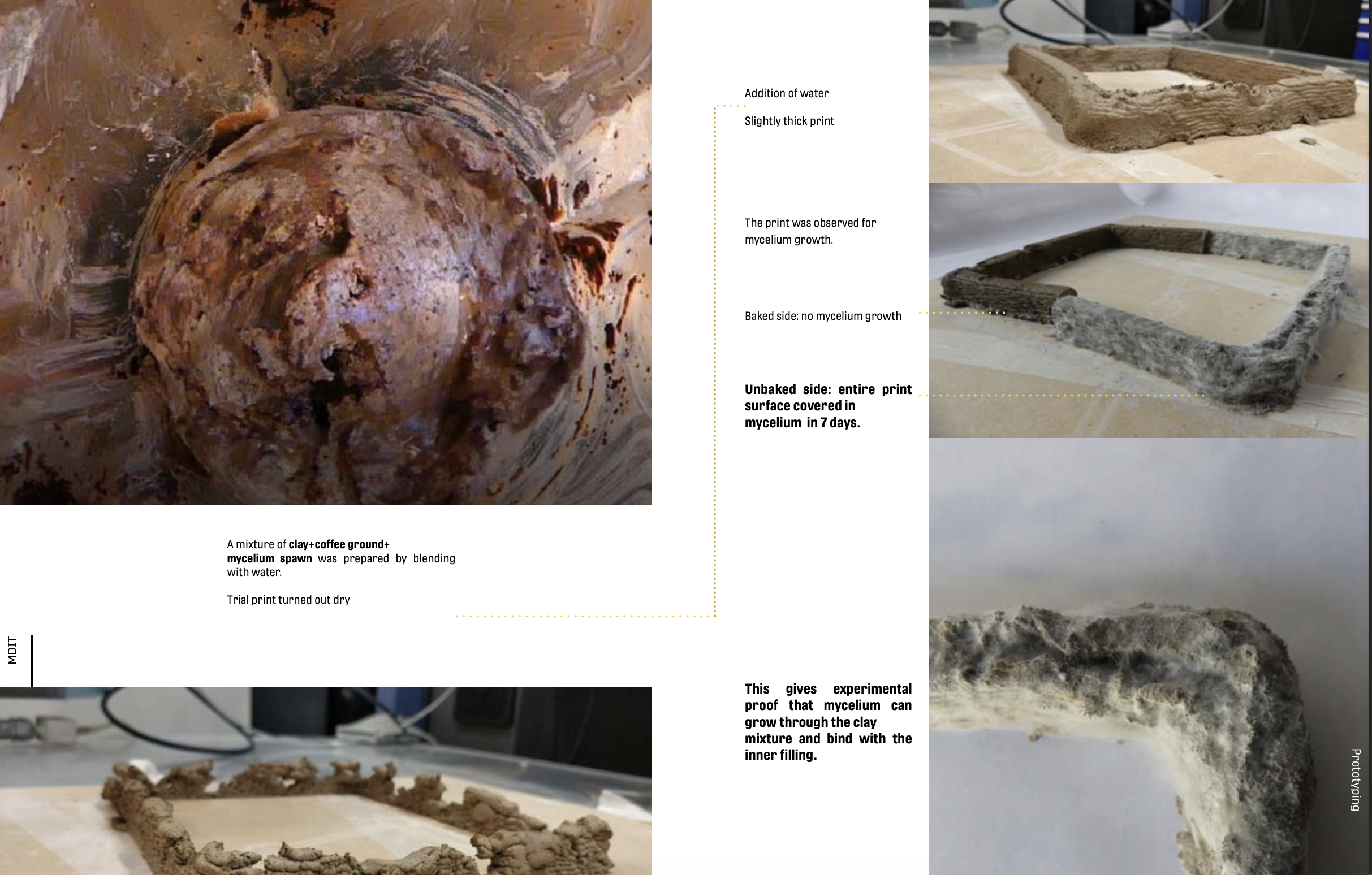
After a series of material testing, the final brick is 3D printed out of a mycelium-clay mixture with a myco-composite filling.
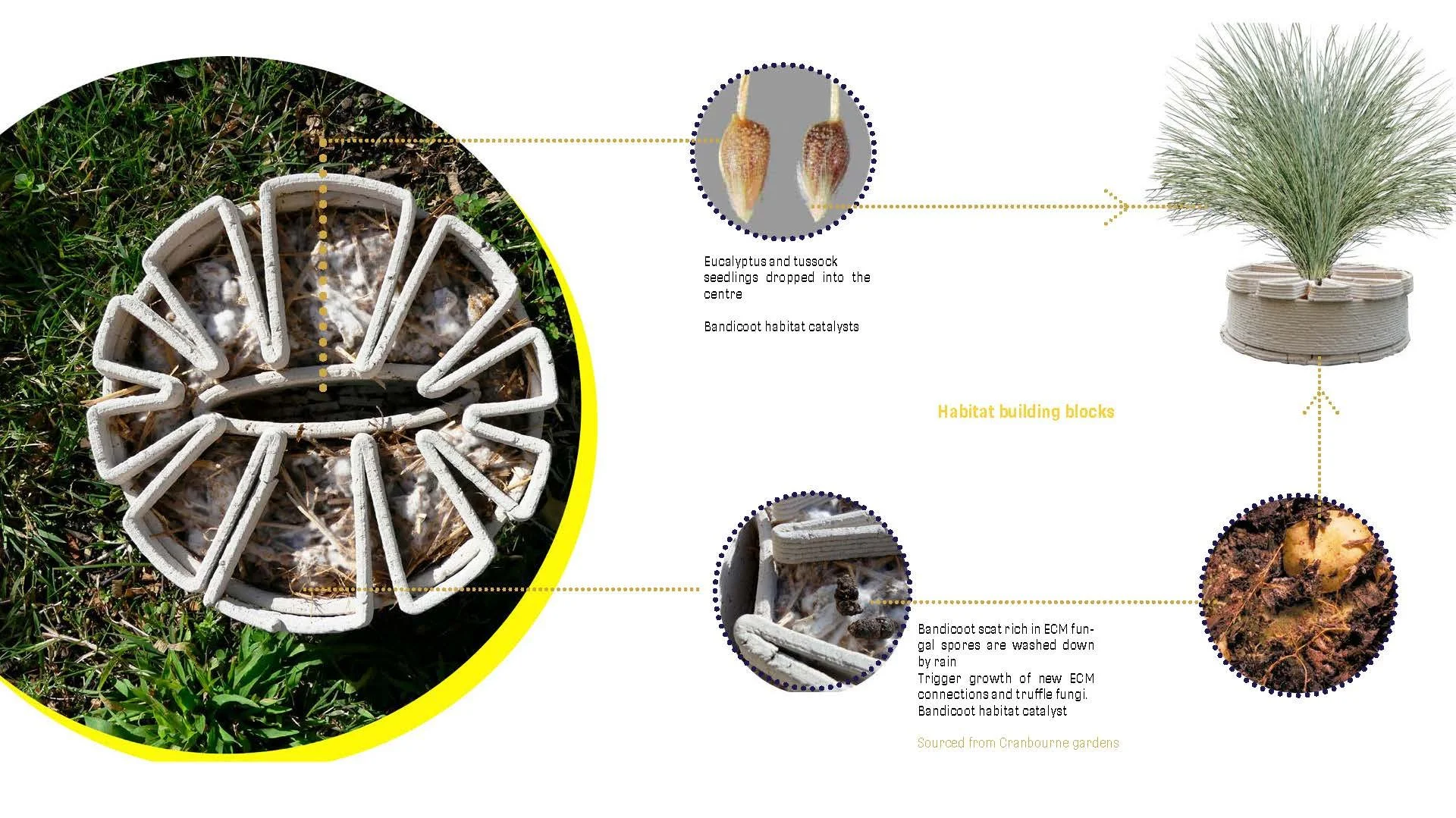
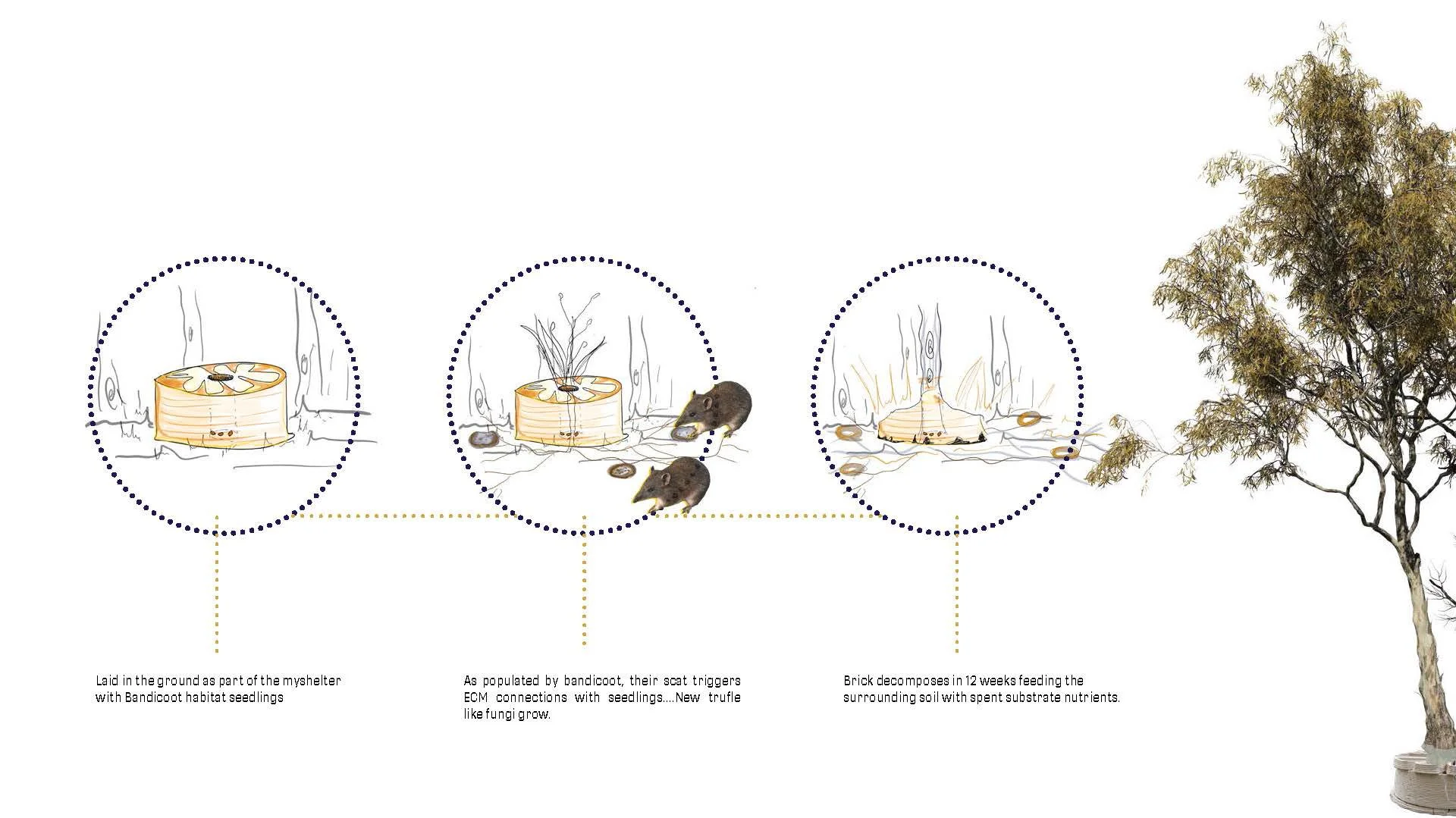
Circular Lifecycle
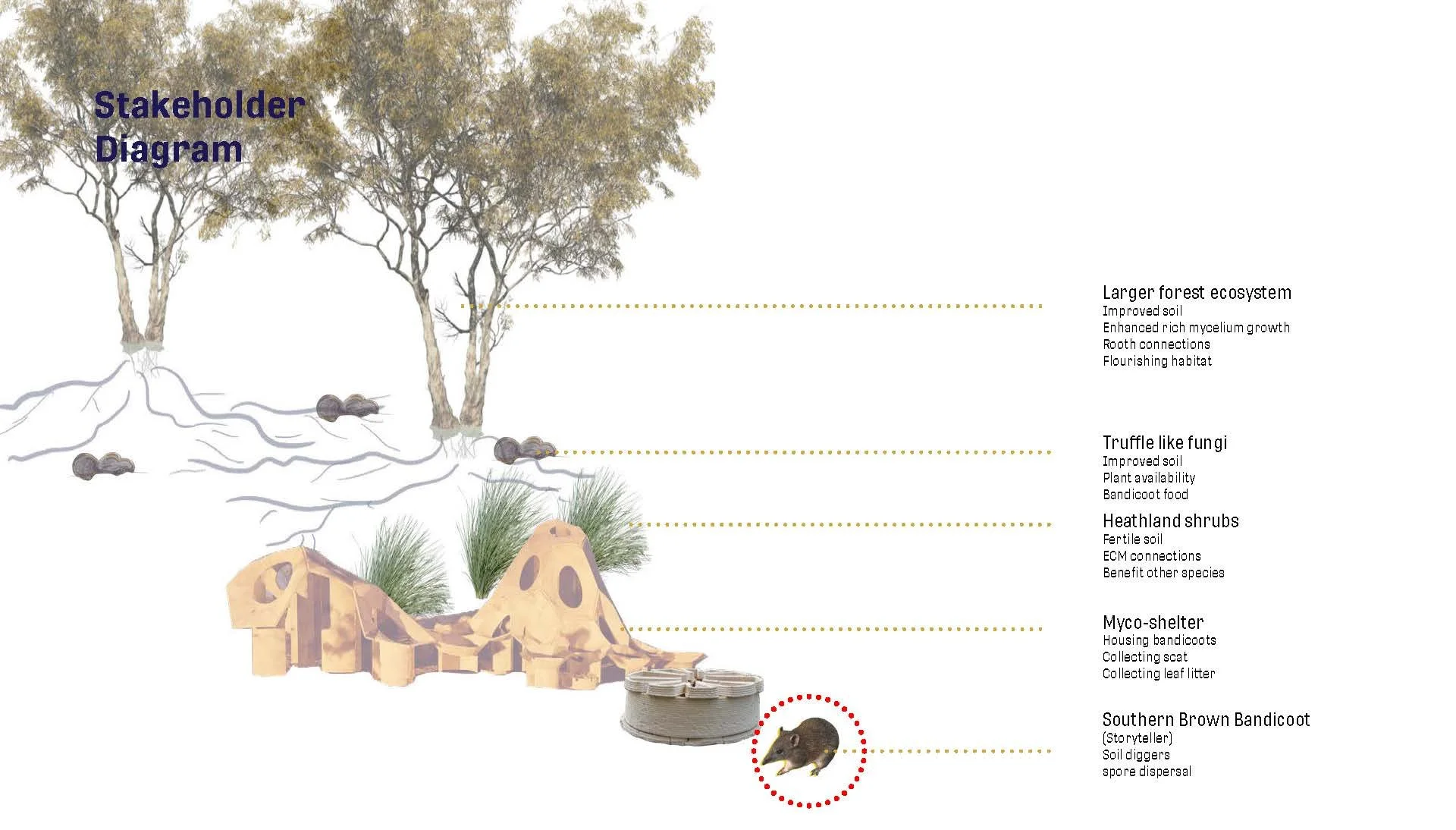
Brick making process
Feeds into the existing ecosystem, giving rise to a new one
The project entailed
Design Research
Networking with industry experts
3D modelling and renders
Prototyping
Material testing and experimentation
Fabrication