Design Thinking
Connectedness in the hybrid world
A ‘future of work’ experiment
RBA Innovation Lab
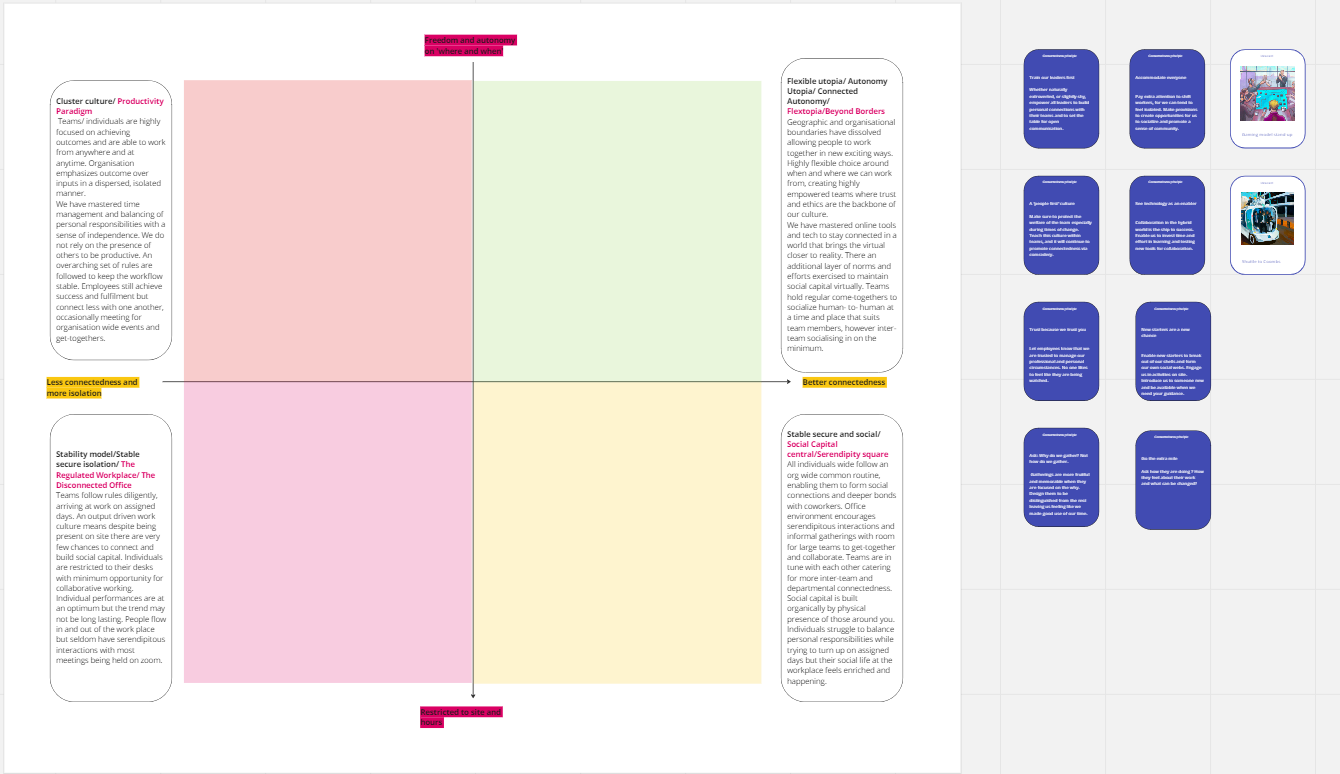
The Project
Led and directed with guidance from the Head of Innovation Lab
Design Challenge
Process & methods
Design thinking, research, implementation and production
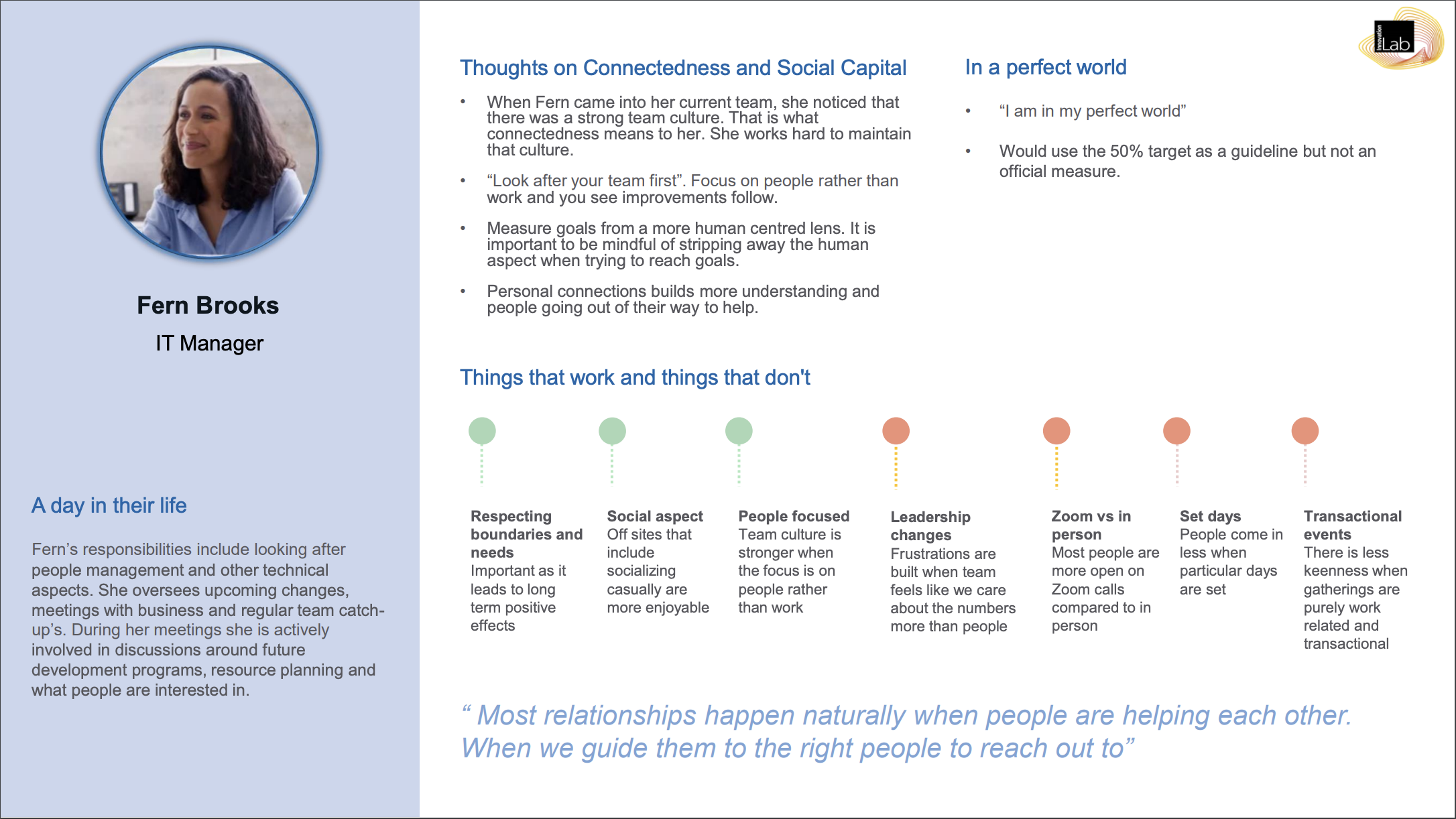

Set of audience profiles
Learnings
“
“
“
More flexibility works well for my team and they really appreciate that I don’t force of track
Sometimes feels silly coming into office to be on zoom meetings
I make sure the team is comfortable to share with me. One of the ways is to let them know I am vulnerable as well.
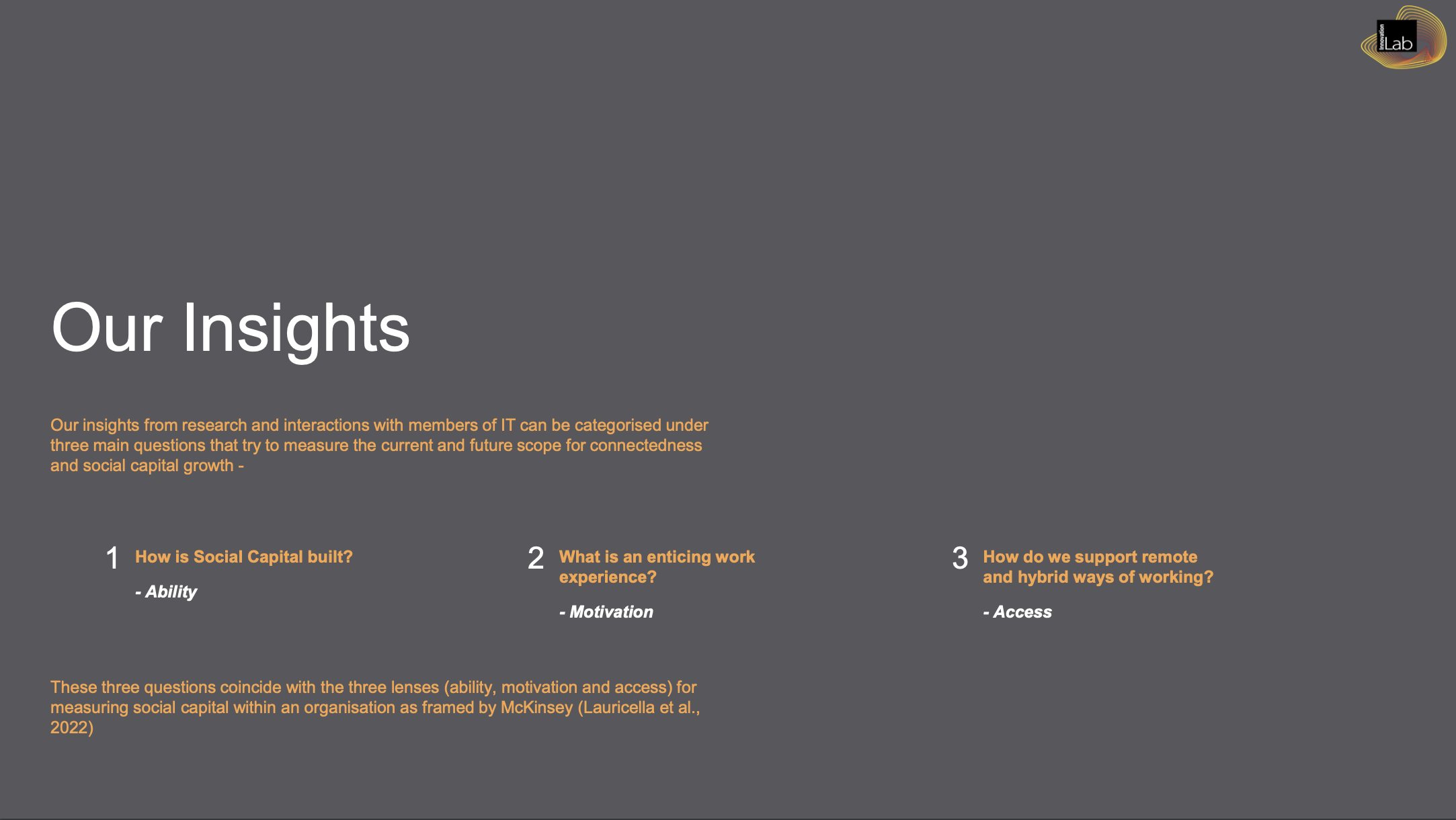
The Innovation Lab had been tasked with helping the Bank understand the value of connectedness and the implications of a post-pandemic world on people’s ability to connect and build social capital.
How might we create an enticing coming to office experience while also enabling teams to identify and practice their best work model in todays hybrid and remote conditions?
The project aims to bring about a culture change at the bank by implementing HCD methodologies to design a toolkit that can help teams and their managers improve inter-team connectedness. The research involved one-on-one conversations with team managers, leaders and ‘super-influencer’ (termed for the project as those individual with deep social connections and relationships in the organisation) with further explorations via ideation sessions.
Secondary research to develop a broad understanding of ongoing trends in the post-pandemic future of work models. This set the direction for primary research with employees of the Bank. Creation: A rich research board, conceptualizing the ties between connectedness and social capital building.
Recruiting tools to collect the right ‘perspectives’. This involved mapping the IT dept of Bank and selecting participants to include a diverse range of individuals across levels that can provide evidence based on unique circumstances.
Interviews with team leads, managers, and social bridge builders (as identified by managers).
Affinity mapping the data to facilitate insight analysis, providing a robust way of highlighting common themes and behavioral trends.
Writing insights and theme topics that capture people’s inspiration.
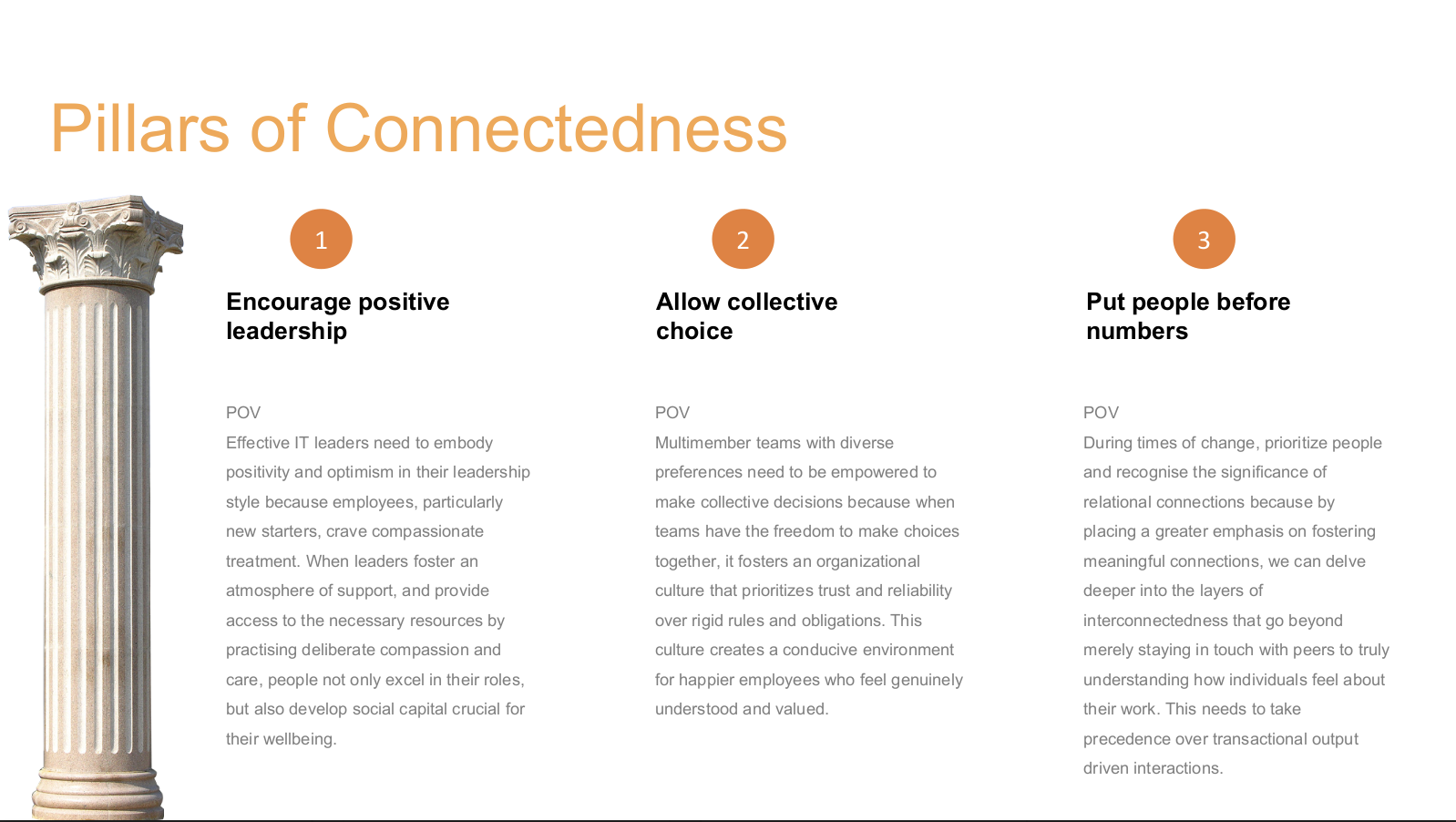
Creation of ‘Connectedness Pillars’: the foundational elements that governed a more connected culture unique to IT at the RBA.
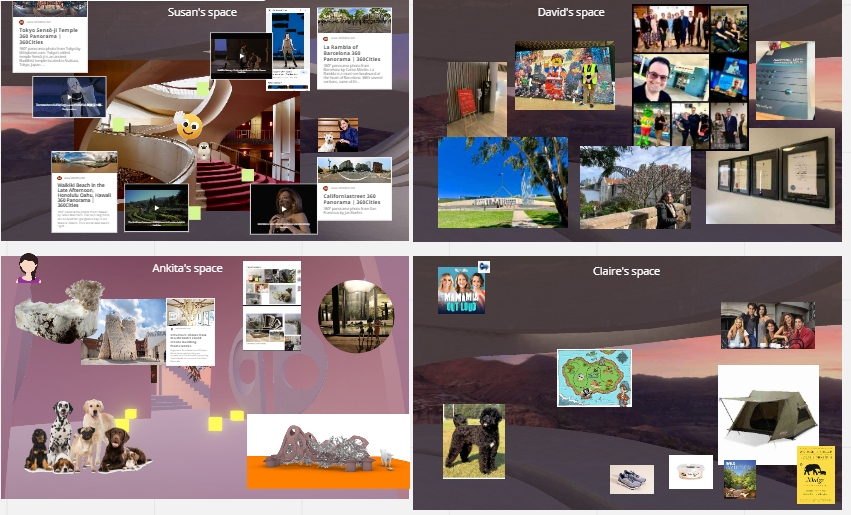
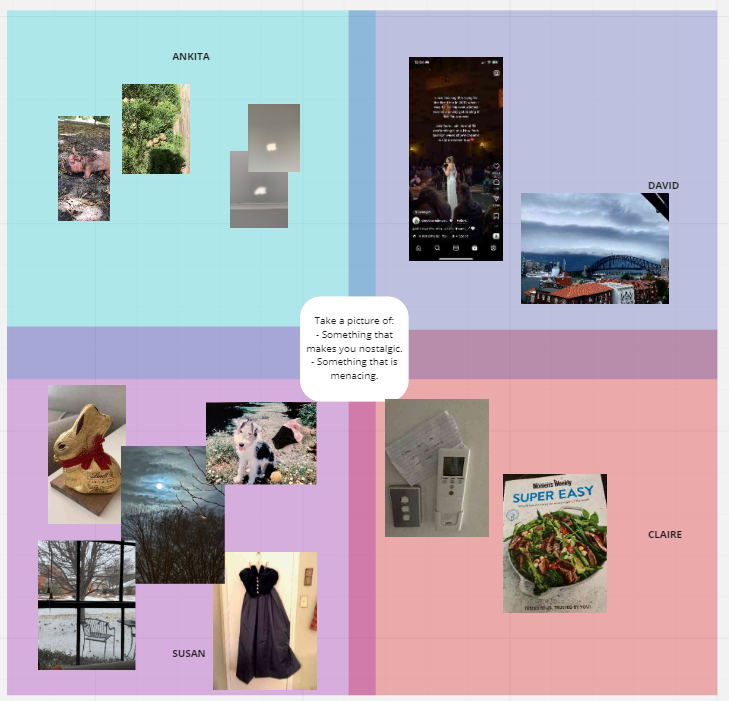
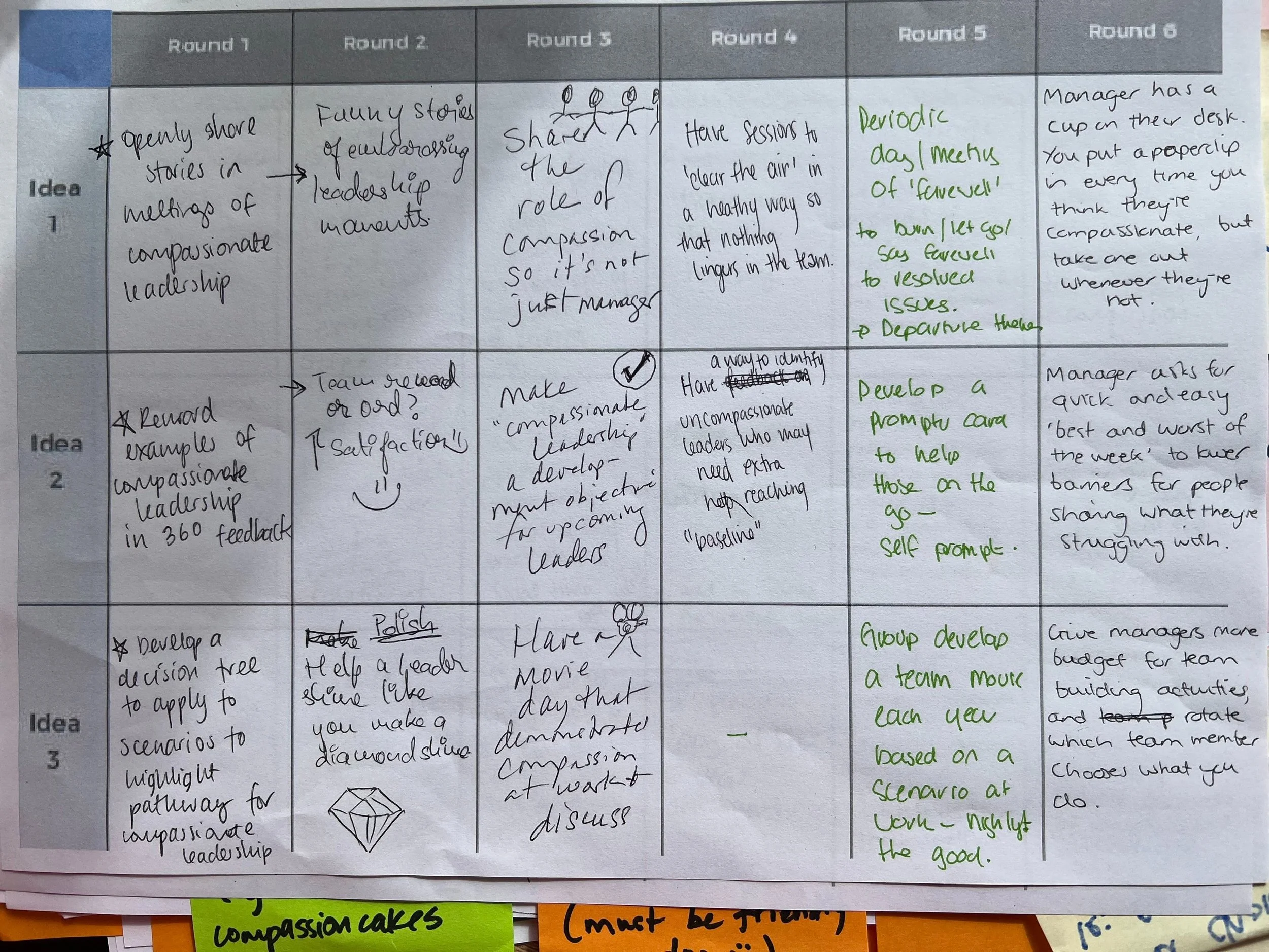
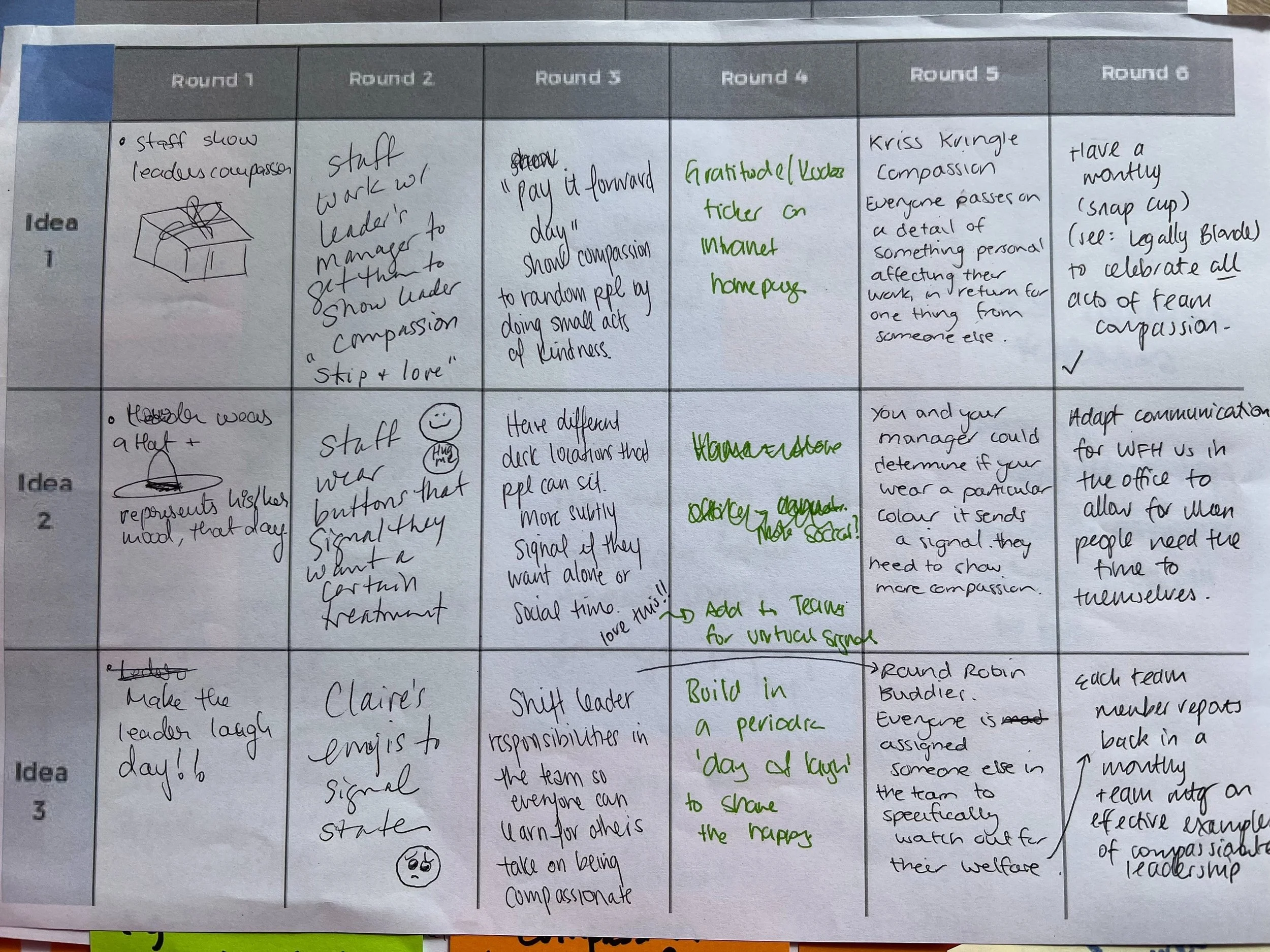
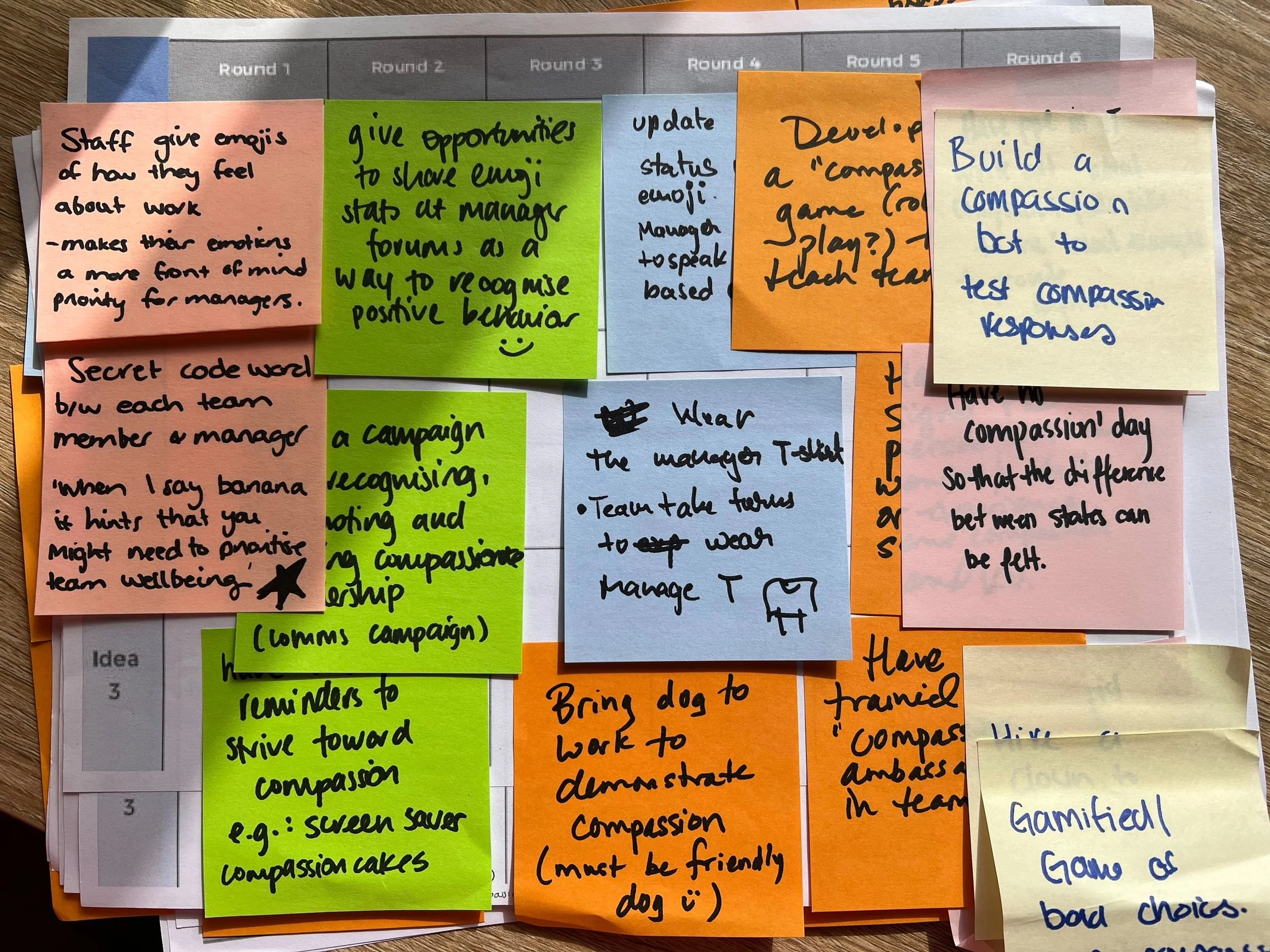
Ideation workshop to generate a collection of low-fidelity prototypes using the following two ideation techniques: 6-3-5 Brain Writing and classic Brainstorming. Session utilised ‘How might we?’ prompts. Eg: How might we enable staff to prompt their leaders to lead compassionately?
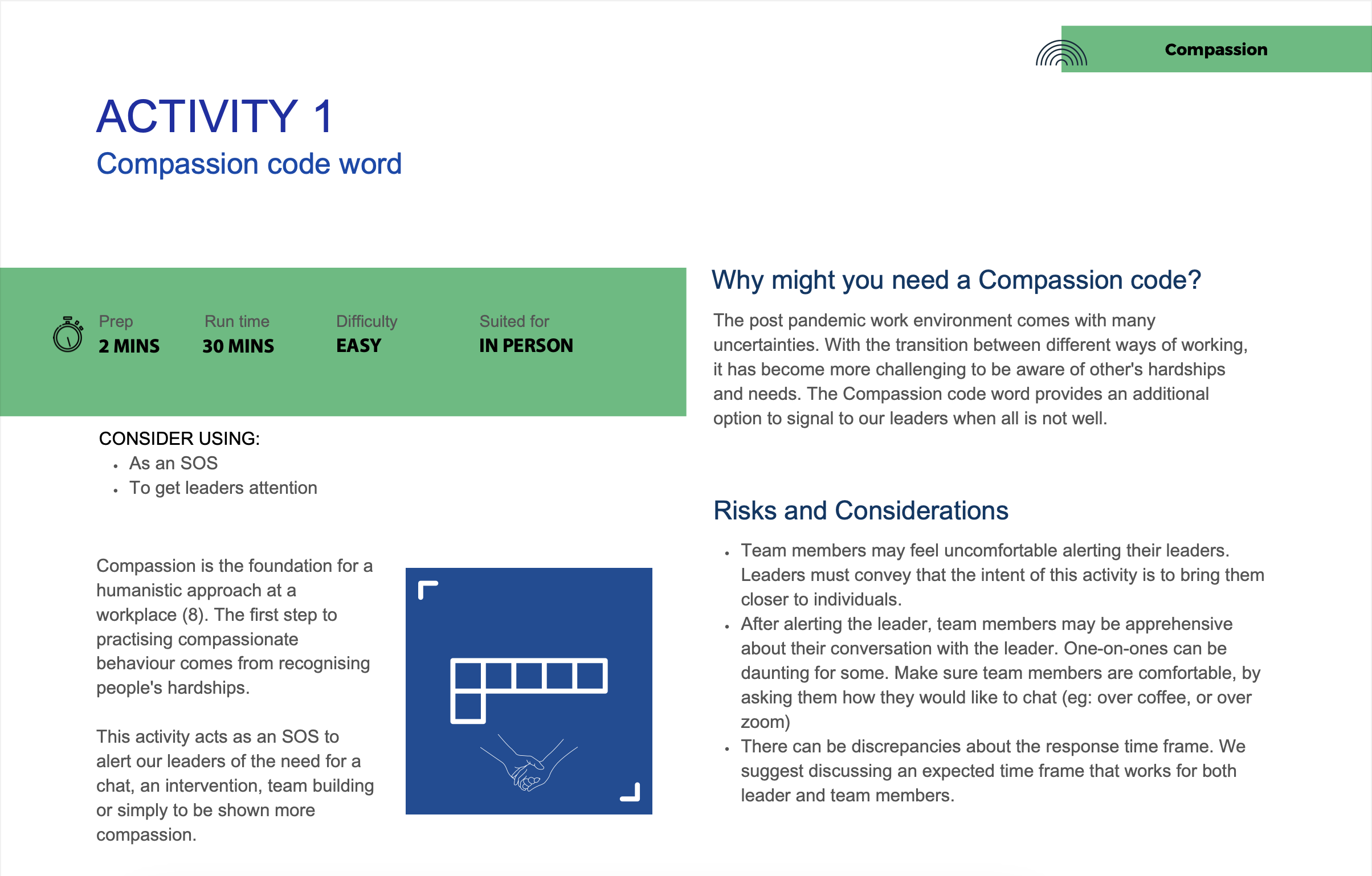
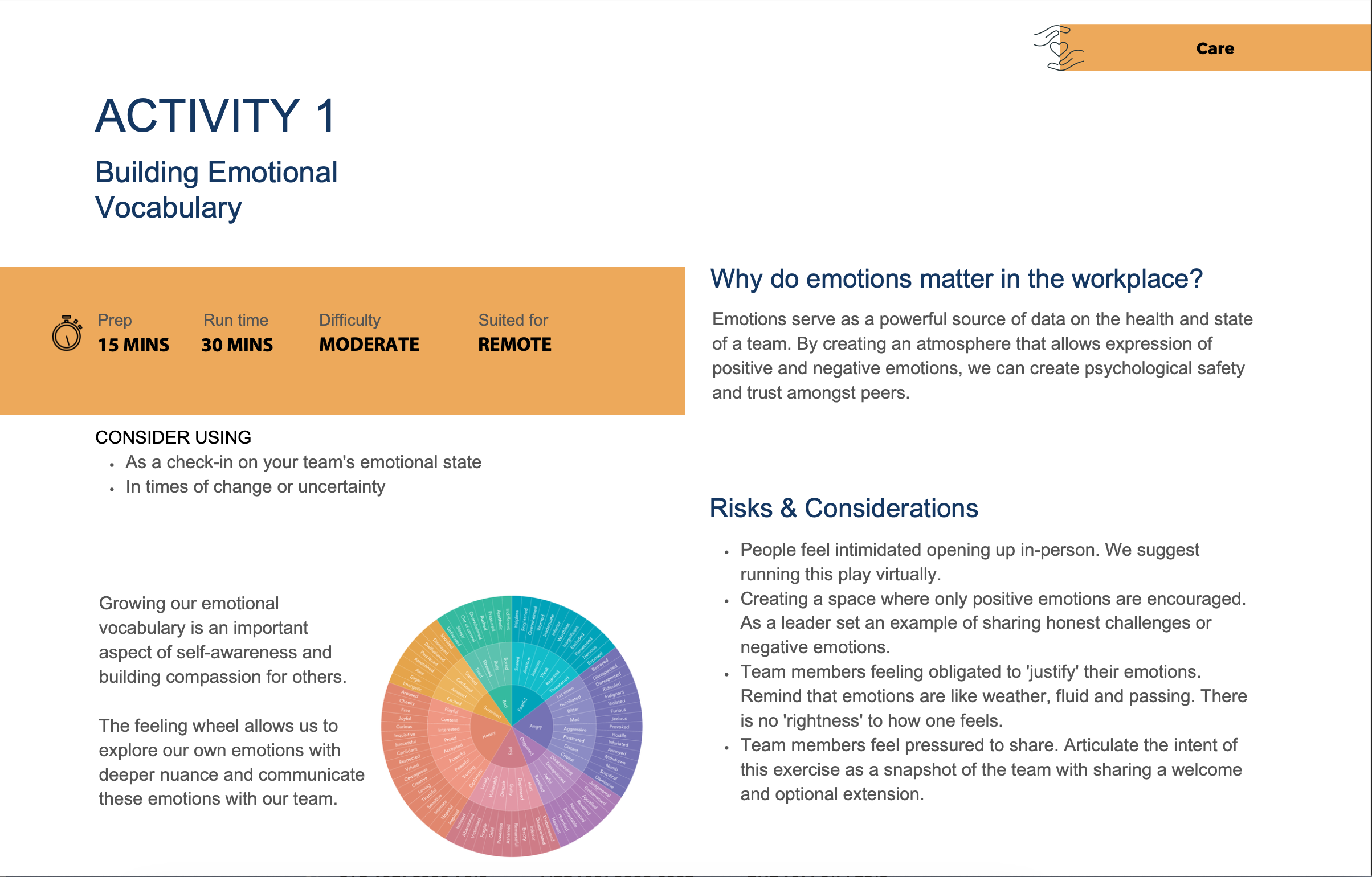
Converted selected prototypes into hi-fidelity playbook activities.
Crystallized the various sections of the playbook and conducted user testing sessions to validate the relevance and usability of playbook activities.
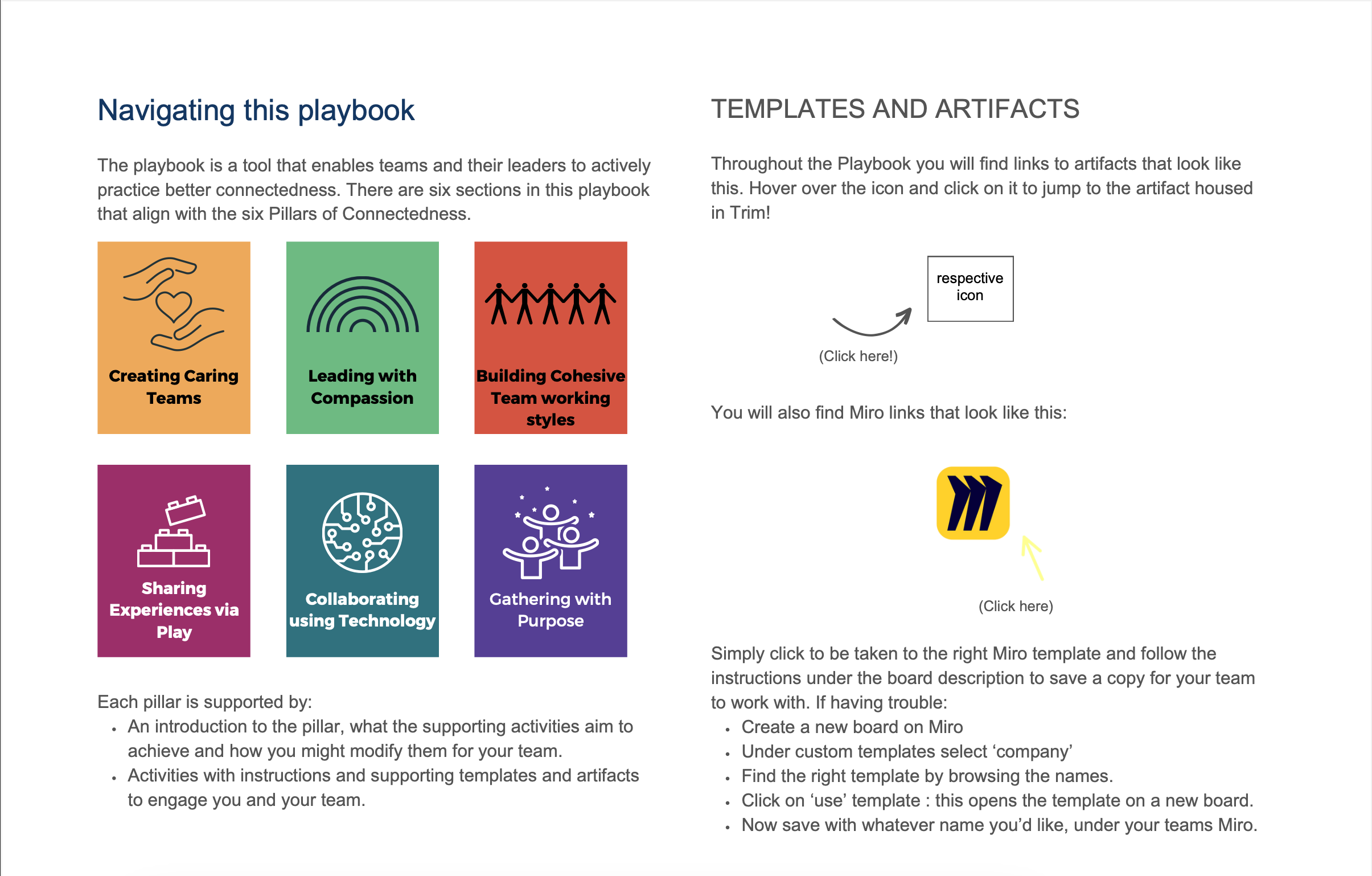
Delivered the IT Connectedness Playbook: A menu of in-person, online, and hybrid ‘plays’ to encourage teams within the Bank to internalise good connectedness as part of their culture and their new ‘way of working’!
When organisations go through phenomenal changes such as during the Covid-19 pandemic, there is a high likelihood of difference in outlooks between decision-makers and employees. This calls for active reflection and a means for realising a future work model that suits all. Design thinking and human-centred design play a crucial role in curating solutions that can balance the needs and desires of both.
Be inclusive and cater to the marginalised user groups that have unique circumstances.
The challenge lies in meeting the expectations of employees in a post-pandemic world where flexibility and autonomy are turning into an expectation rather than a choice.